Claude Duet is here. A new app that becomes your work companion, reaching out even without being asked.

Table of Contents
Hello. On October 21, 2026 (US time), Anthropic announced a new app called "Claude Duet." It is currently rolling out gradually as a research preview to those on the waitlist.
The official Claude X post introduced Claude Duet as follows:
We're opening a research preview of Claude Duet, a new app where Claude works as a proactive agent.
This means it is a new app where Claude works as a "proactive agent"—an agent that acts on its own initiative. Until now, Claude was someone who only moved when spoken to. The big difference with Claude Duet is that Claude reaches out to you first.
In this article, based on the official announcement article and posts on X, we will break down what Claude Duet can do for you.
Claude Duet is an Agent That "Acts on Its Own"
The official announcement summarizes what Claude Duet can do into the following four points:
- Surfacing what needs your attention
- Handling tasks you assign it
- Continuing to work even while you're away
- Checking in before executing actions on your behalf
Anthropic explains that Claude Duet was created for professionals and small business owners who are overwhelmed with work. It is designed to help people who face countless daily decisions figure out where to spend their time and energy, giving them the bandwidth to tackle larger projects they couldn't get around to before.
The app will be available as a standalone app for iOS and Android, and can also be used via claude.ai.
Claude Opus 5.5 Powers the Judgment
According to the official announcement, the reliability of Claude Duet lies in its judgment. Anthropic designed Claude Duet around Claude Opus 5.5. Claude Duet is built to judge for itself what it should handle, what can wait, and when it needs to confirm with you first.
A Morning Brief and Contact Only When Necessary
Every morning, Claude Duet sends a brief—a short summary of important items gathered from connected apps. An image in the post on X showed a notification like this:
Morning, Nicole! For today: Submit health permit. Hiring decisions. Northfield renewal.
Throughout the day, Claude Duet monitors connected apps and only messages you when something requires action.
A Wide Range of Tasks You Can Delegate
Of course, you can also assign tasks to it yourself. The official announcement mentions a broad spectrum of tasks, ranging from simple administrative work like scheduling meetings to building dashboards using data from dozens of tools, financial and sales forecasting, prototyping, and even developing web apps.
How to Use It: Simple Interactions Within a Single Conversation
Let's look at how Claude Duet operates, based on the official announcement.
Seamlessly Inherits Claude's Settings
Claude Duet inherits the memory, skills, and connected apps already in your Claude account. Because of this, there is almost no initial setup required.
What changes is the style of interaction. Claude Duet reaches out to you first. You respond with text or voice within a single, continuous conversation thread. The system is designed so that whether it's a quick reply or a week-long project, you can start it all from the same place.
Work Progresses Even Without Your PC or Phone Open
Claude Duet runs on a virtual machine (a cloud-based computer) equipped with a dedicated browser. Therefore, work continues even if your laptop or smartphone is powered off.
When you assign a task with a brief message, Claude Duet determines which apps to use and what steps to take on its own, working in the background. You will receive a notification once it's done or when your confirmation is needed.
Checks Every Few Hours
Claude Duet checks connected accounts every few hours. The official announcement explains that constant monitoring would consume your plan's usage limits much faster. You can adjust what you want to be notified about and how often.
You Retain Key Decisions
Claude Duet handles tasks like reading, drafting, and preparing autonomously. However, before executing actions such as sending a message, making a payment, signing a document, or deleting anything, it shows you precisely what it plans to do and waits for your approval.
Furthermore, there are certain actions it will not perform even with approval. The official announcement cites trading securities and transferring funds between accounts as examples. You can disconnect apps integrated with Claude Duet at any time.
Connects to Over 6,000 Connectors and Plugins
Claude Duet can use over 6,000 connectors and plugins available in the Claude Marketplace. The official announcement highlights the following use cases:
- Finding overlooked Gmail or Slack messages and helping draft replies
- Checking unpaid invoices in Intuit QuickBooks or Stripe and drafting reminders
- Preparing payroll in Gusto and executing it with hours, bonuses, and expense reimbursements filled in
- Drafting job postings and publishing them to LinkedIn once reviewed and approved
- Helping prepare contracts and routing them through Docusign for review and signature
- Drafting follow-up emails using HubSpot contacts and deal history
- Turning product launches into social media campaigns with Canva
- Setting up, designing, and running a Shopify store
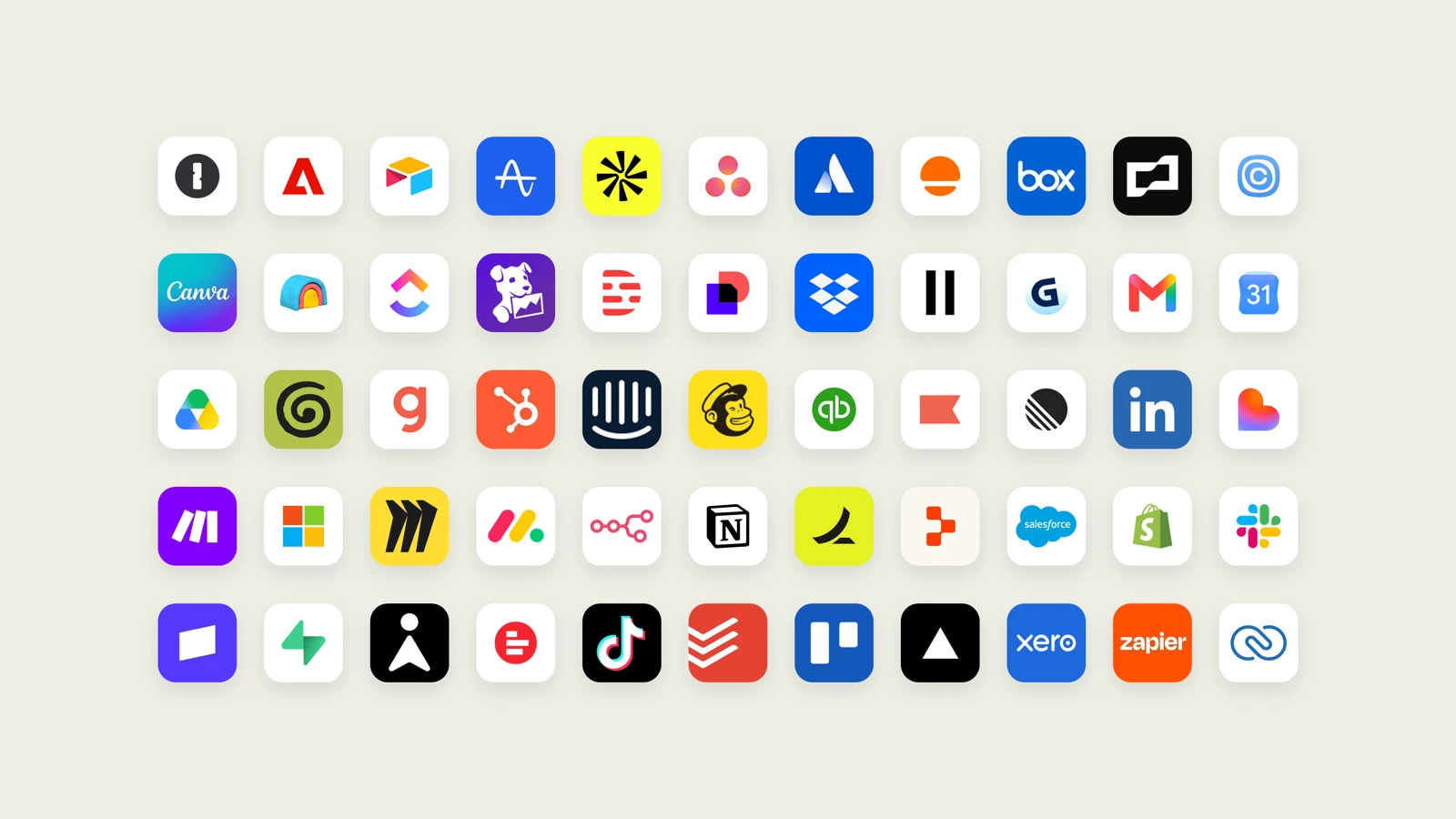 (Source: Introducing Claude Duet | Claude by Anthropic)
Shopping Without Exposing Your Real Card Number
Claude Duet can also purchase necessary business items using Stripe’s digital wallet, "Link." Claude Duet confirms the purchase with you first, and then Link requests authorization for the payment. Since virtual cards are used for payments, your actual card number is never shared with the merchant. For online stores, checkout via Shopify's Shop Pay is also supported.
In the near future, it is expected to be able to sign in to sites using credentials stored in 1Password, provided you give permission.
Safety and Privacy Architecture
An agent that reads emails and sends messages on your behalf must constantly evaluate where information can be safely shared. As such, a significant portion of Claude Duet's announcement is dedicated to safety. The official announcement explains that Anthropic incorporated years of accumulated efforts in agent safety and security into Claude Duet.
- Principles for Trustworthy Agents - Built on the same framework for trustworthy agents as Claude Code and Claude in Chrome
- Never Sees Passwords Directly - Credential handling follows the same design as Claude Managed Agents; Claude Duet never directly sees passwords or sign-in tokens
- Halting Unprompted Actions - Actions are approved by the auto mode classifier, also used in Claude Code
- Defenses Against Hidden Instructions - Protection against prompt injections embedded in pages or emails stems from browser interaction research
- External Attack Testing - Subjected to penetration testing by internal red teams and third-party firms, and included in public bug bounty programs
Dedicated Classifiers to Prevent Confidential Data Leaks
Additionally, Claude Duet includes a new dedicated classifier and safety system prompts. This classifier and system prompt review messages individually, designed to prevent leaks of confidential information.
For the most sensitive categories of data, such as credit card numbers and government ID details, it is designed to refuse requests to share them. Other sensitive details, such as health records or personal household finances, will only be transmitted if you explicitly instruct Claude Duet to send them.
Anthropic states that it will continue strengthening these protections and plans to publish a detailed breakdown of its safety architecture soon.
How Early Testers Are Using It
The official announcement also introduces examples from early users.
Inside Anthropic, for instance, Boris Cherny, lead of the Claude Code team, reportedly talks through his mental to-do list with Claude Duet while on walks. This keeps work from piling up until he sits at his desk. Chelsea Larsson, lead of the model and product behavior design team, hands her to-do list over to Claude Duet before spending time with her children, receiving a summary report of the results in the evening.
There is also feedback from early-access business owners:
- Jess Provencher, a real estate broker, receives a daily morning summary from Claude Duet. One day, without being asked, Claude Duet pointed out that a scheduled property showing was actually set for a different date on the calendar.
- Amin Ebrahimi, a Florida restaurateur with about 110 employees, used Claude Duet for accounting, customer support, and marketing, clearing invoices across multiple locations.
- Mya Dalton, a brand strategist, found that Claude Duet spotted an upcoming prospective client call on her calendar, prepped background briefing notes, noticed the call was scheduled right before a flight, and suggested rescheduling it.
Particularly in the cases of Jess and Mya, Claude Duet noticed things and initiated contact before being asked.
Available Starting with US Pro and Max Plans
Claude Duet is included in the Pro and Max plans. A gradual rollout has begun for waitlisted users, starting with Pro and Max subscribers in the United States. If you join the waitlist, you will be notified by email when access becomes available.
Usage Limits Shared with Claude Overall
During the research preview, Claude Duet shares plan usage limits with Claude's other features. However, the usage profile differs from standard chat conversations. Background checks count toward the quota, and heavier tasks like creating financial models or slide decks consume more usage due to increased model processing and background compute.
Current Limitations of an Early Version
The official announcement and posts on X also candidly outline current limitations:
- It may misread the context of email threads or misjudge what is urgent.
- Its core features are tailored for work, meaning it is not yet adept at personal errands like booking tickets.
- It cannot yet stream or display the screen of the browser it is using.
- It is currently separated from the primary Claude app. How the two apps will be integrated will be determined based on early user feedback.
Please note that the features, safety mechanisms, and user feedback introduced in this article are based entirely on Anthropic's announcement. Because it is in the research preview stage, actual performance and usability will need to be verified once it becomes widely accessible.
The Excitement of a First-Party Agent via the Usual Claude Subscription
Claude Duet is not the first agent capable of reaching out autonomously. Several similar agents, such as OpenClaw, Hermes Agent, and Dots, have already been introduced.
What excites me is that the original creator, Anthropic, has released an agent built directly on the Claude platform we use every day. Best of all, it is accessible within existing Pro and Max subscriptions. Since it carries over memories, skills, and connected apps directly from your Claude account, there's no need to configure a different service from scratch.
To be honest, even when Dots was released by OpenAI, I was confident Anthropic would eventually launch an autonomous AI agent of its own. Because of that, I wasn't overly concerned.
Right now, I have Claude Code connected to Telegram and use it from my smartphone (the setup process is covered in my Claude Code Channels article). When I text "Good morning," Claude replies with a summary of the day's schedule, tasks, and overdue items. Of course, it handles whatever else I ask. But apart from programmatically scheduled tasks, it only acts after I prompt it. Claude Duet, however, initiates that spark on its own. Being able to transition to this paradigm while sticking with the Claude I know feels like a major step forward.
On the flip side, there's always the concern: "Will it do too much on its own?" It makes complete sense that the official announcement devoted so much space to this topic. It always confirms before sending, paying, signing, or deleting, and will not execute transactions like wire transfers even with approval. Card numbers are hidden via virtual cards. Passwords are never seen directly. Because these boundaries are clearly defined, it becomes much easier to judge what can safely be delegated.
Living in New Zealand, I am outside the initial rollout region for now. Once it becomes available in Japan or New Zealand, I look forward to trying it out.
Summary
Here is a summary of the key points regarding Claude Duet:
- Announced on October 21, 2026 (US time), it is a new app where Claude works as a proactive agent.
- Highlights what needs your attention, completes assigned tasks, continues working while you are away, and asks for confirmation before acting on your behalf.
- Powered centrally by Claude Opus 5.5, delivering daily morning briefs and reaching out only when necessary.
- Inherits memories, skills, and connected apps from your Claude account, requiring virtually no setup.
- Runs in a virtual machine equipped with a dedicated browser, progressing tasks even when your PC or smartphone is closed.
- Awaits authorization before sending, paying, signing, or deleting. Will not trade securities or transfer funds even with approval.
- Connects to over 6,000 connectors and plugins in the Claude Marketplace. Shopping is handled via Stripe Link virtual cards.
- Equipped with dedicated classifiers to prevent leaks of confidential data, outright refusing to share card numbers or government IDs.
- Rolling out gradually to waitlisted users on US Pro and Max plans, sharing overall Claude usage limits.
Having a native, proactive agent built by the original creators within the regular Claude subscription is a very reassuring development. I look forward to its availability expanding to more regions.